Beschreibung
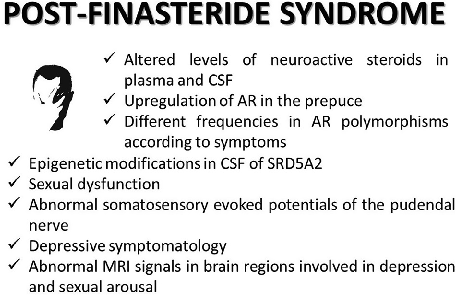
Proposed pathophysiological mechanisms underlying the persistent side effects of finasteride are outlined, connecting hormonal disruption to epigenetic changes and altered gut microbiota composition.
More Figures from This Paper
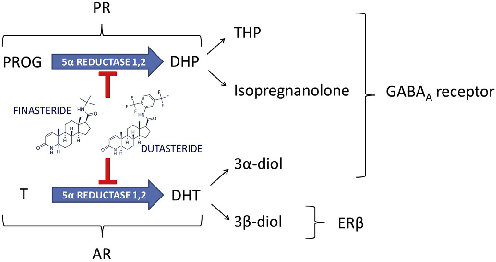
Figure 4
Experimental findings on adverse effects of 5-alpha-reductase inhibitors in animal models are summarized, providing mechanistic insights into how these drugs may affect the central and peripheral nervous systems.
diagram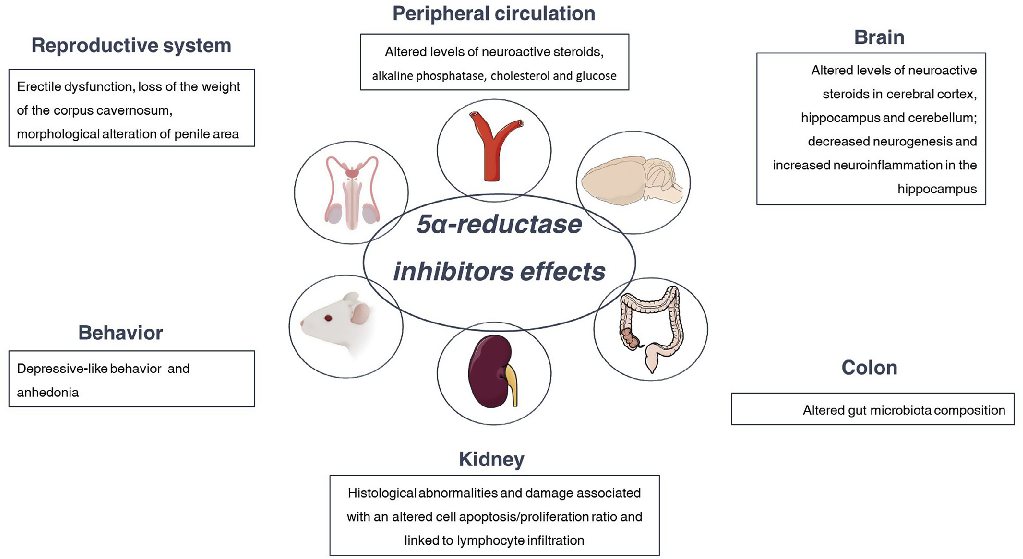
Figure 6
Side effects of treatment with 5-alpha-reductase inhibitors observed in experimental models are comprehensively catalogued, covering reproductive, neurological, and metabolic endpoints.
diagramFigure 5
Diagram
456 × 295px
· 80,7 KB
Source Paper
Post-finasteride syndrome: An emerging clinical problem.Cite This Figure
 > Source: Silvia Diviccaro et al. "Post-finasteride syndrome: An emerging clinical problem.." *Neurobiology of stress*, 2020. PMID: [32435662](https://pubmed.ncbi.nlm.nih.gov/32435662/)
<figure>
  <img src="https://pdfs.citedhealth.com/figures/32435662/80.png" alt="Proposed pathophysiological mechanisms underlying the persistent side effects of finasteride are outlined, connecting hormonal disruption to epigenetic changes and altered gut microbiota composition." />
  <figcaption>Figure 5. Proposed pathophysiological mechanisms underlying the persistent side effects of finasteride are outlined, connecting hormonal disruption to epigenetic changes and altered gut microbiota composition.<br>  Source: Silvia Diviccaro et al. "Post-finasteride syndrome: An emerging clinical problem.." <em>Neurobiology of stress</em>, 2020. PMID: <a href="https://pubmed.ncbi.nlm.nih.gov/32435662/">32435662</a></figcaption>
</figure>