Minoxidil الأشكال
8 أشكال من أبحاث محكّمة
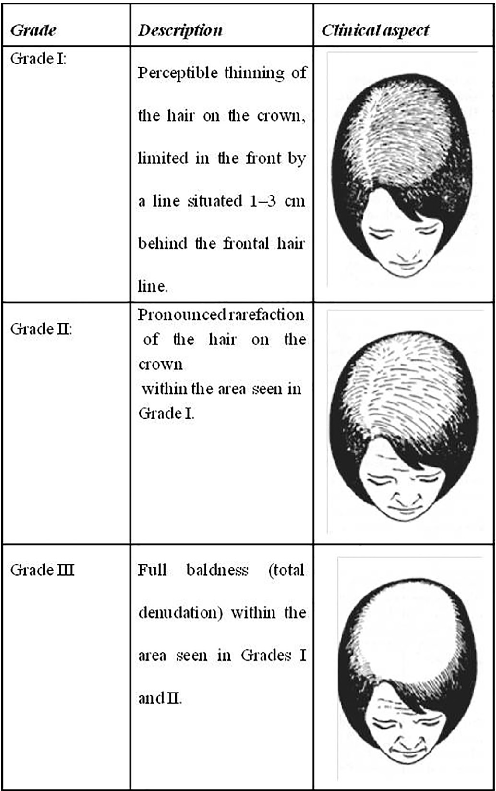
The Ludwig scale classifies female pattern hair loss into three progressive stages, ranging from minimal thinning at the crown (Grade I) to extensive hair loss across the top of the scalp (Grade III). This grading system remains one of the most widely used clinical tools for assessing FPHL severity.
Female pattern hair loss: A clinical, pathophysiologic, and therapeutic review.
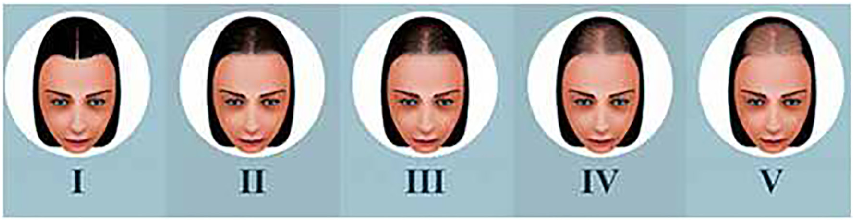
Sinclair's classification divides midline pattern alopecia into four intensity levels, progressing from a normal-appearing scalp to increasingly visible widening of the central part. The scale, introduced by Sinclair et al. (2005), provides a practical visual reference for clinicians assessing hair loss severity.
Female pattern hair loss: A clinical, pathophysiologic, and therapeutic review.
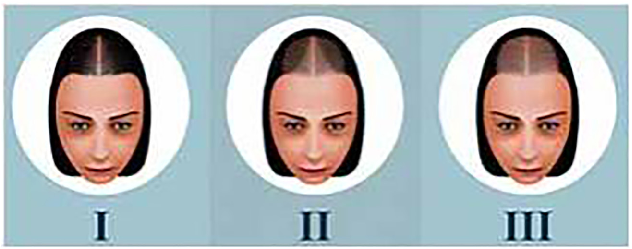
Olsen's classification system highlights the characteristic triangular or Christmas-tree pattern of frontovertical alopecia seen in female pattern hair loss. The accentuation of thinning at the frontal midline distinguishes this pattern from the more diffuse Ludwig classification.
Female pattern hair loss: A clinical, pathophysiologic, and therapeutic review.
Classification systems for androgenetic alopecia severity are presented, distinguishing male and female pattern hair loss stages.
Androgenetic alopecia: An update.
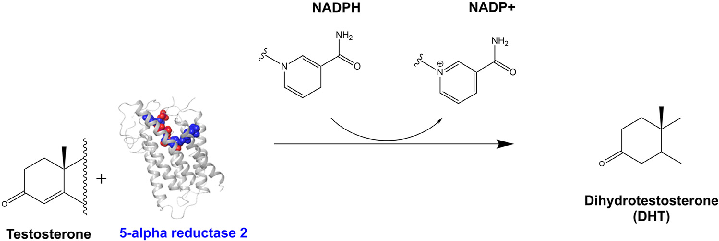
The DHT synthesis pathway via SRD5A2 is diagrammed, showing how 5-alpha reductase converts testosterone to dihydrotestosterone in the presence of NADPH, the key hormonal driver of AGA.
Androgenetic alopecia: An update.
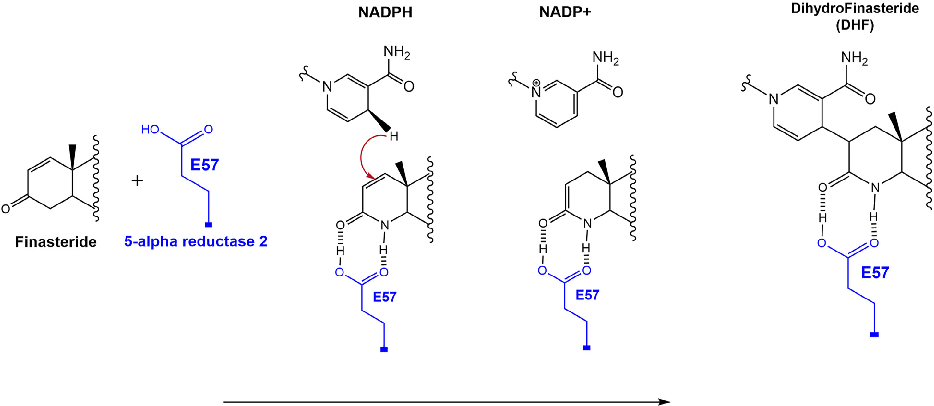
Finasteride's mechanism of inhibition is depicted at the molecular level, showing covalent adduct formation between NADPH and finasteride that prevents further hydride transfer to testosterone.
Androgenetic alopecia: An update.
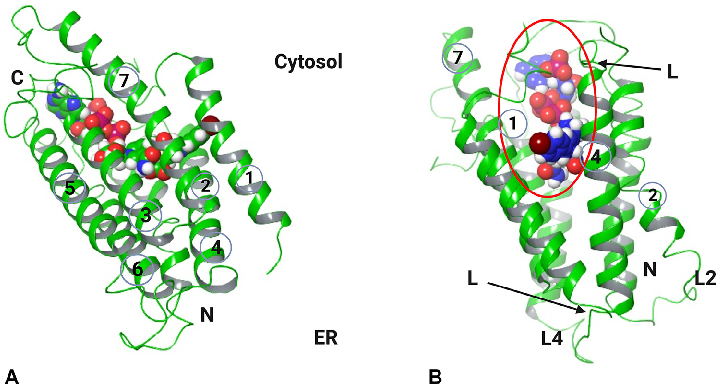
The three-dimensional structure of human SRD5A2 is shown with its seven transmembrane domains, active site, and NADP-DHF adduct positioning within the enzyme channel.
Androgenetic alopecia: An update.
A proposed treatment algorithm for female pattern hair loss incorporates finasteride as a potential alternative when topical minoxidil fails, including appropriate patient selection criteria and monitoring requirements.
Finasteride and Its Potential for the Treatment of Female Pattern Hair Loss: …