Mô tả
Inflammatory marker levels or immunological parameters measured in rats exposed to diazinon with and without plant oil protection.
More Figures from This Paper
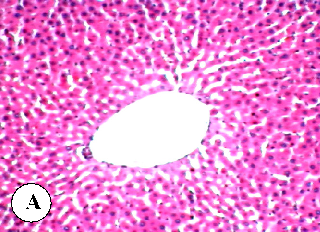
Figure 4
Histopathological examination of liver tissue from control rats, showing normal hepatic architecture for baseline comparison with diazinon-treated groups.
micrograph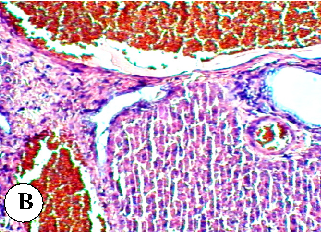
Figure 5
Liver histopathology in diazinon-treated rats showing hepatocellular damage, inflammatory infiltration, and structural changes indicative of pesticide-induced hepatotoxicity.
micrograph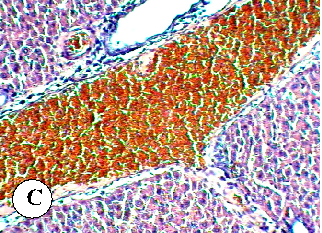
Figure 6
Liver tissue sections from rats co-treated with diazinon and a plant oil, showing varying degrees of protection against pesticide-induced hepatic damage.
micrograph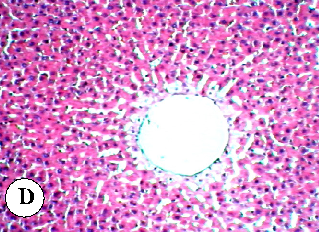
Figure 7
Additional liver histopathology from a different plant oil treatment group, demonstrating the comparative hepatoprotective effects of various plant oils against diazinon toxicity.
micrograph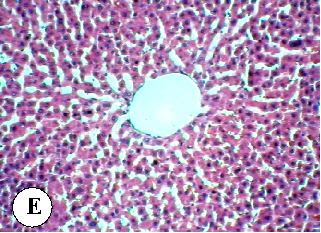
Figure 8
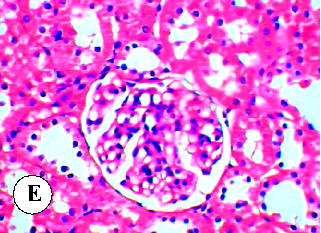
Kidney histopathology from control rats showing normal renal architecture, providing a baseline for comparison with diazinon-exposed groups.
micrograph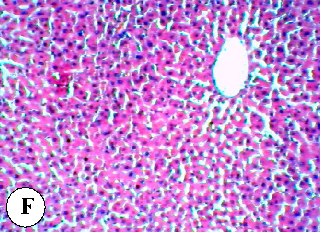
Figure 9
Renal tissue sections from diazinon-treated rats revealing tubular damage and glomerular changes indicative of nephrotoxicity.
micrographFigure 18
ChartSource Paper
Protective effect of some plant oils on diazinon induced hepatorenal toxicity in male rats.Cite This Figure
 > Source: Atef M Al-Attar et al. "Protective effect of some plant oils on diazinon induced hepatorenal toxicity in." *Saudi journal of biological sciences*, 2017. PMID: [28855808](https://pubmed.ncbi.nlm.nih.gov/28855808/)
<figure>
  <img src="https://pdfs.citedhealth.com/figures/28855808/298.png" alt="Inflammatory marker levels or immunological parameters measured in rats exposed to diazinon with and without plant oil protection." />
  <figcaption>Figure 18. Inflammatory marker levels or immunological parameters measured in rats exposed to diazinon with and without plant oil protection.<br>  Source: Atef M Al-Attar et al. "Protective effect of some plant oils on diazinon induced hepatorenal toxicity in." <em>Saudi journal of biological sciences</em>, 2017. PMID: <a href="https://pubmed.ncbi.nlm.nih.gov/28855808/">28855808</a></figcaption>
</figure>