Deskripsi
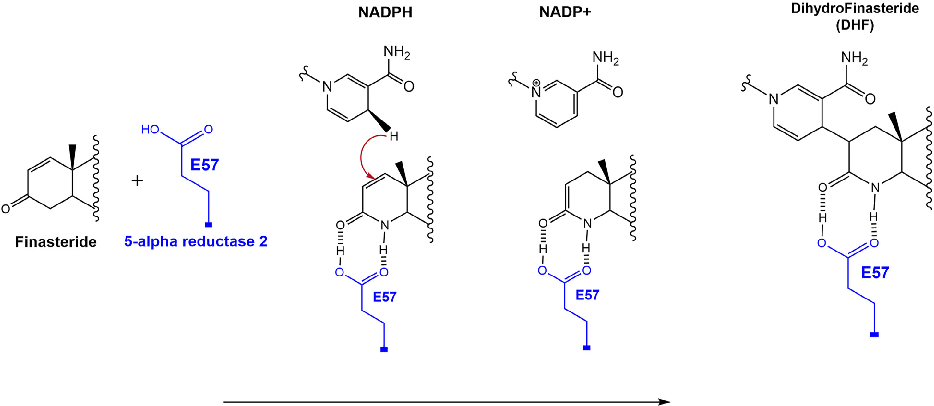
Finasteride's mechanism of inhibition is depicted at the molecular level, showing covalent adduct formation between NADPH and finasteride that prevents further hydride transfer to testosterone.
More Figures from This Paper
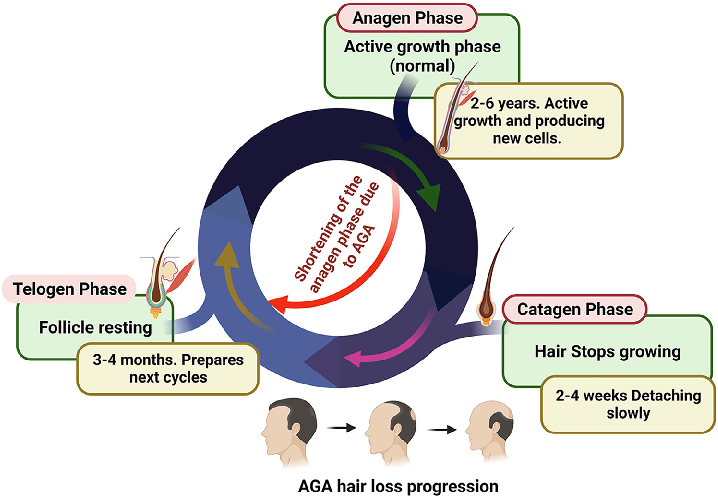
Figure 2
Classification systems for androgenetic alopecia severity are presented, distinguishing male and female pattern hair loss stages.
diagram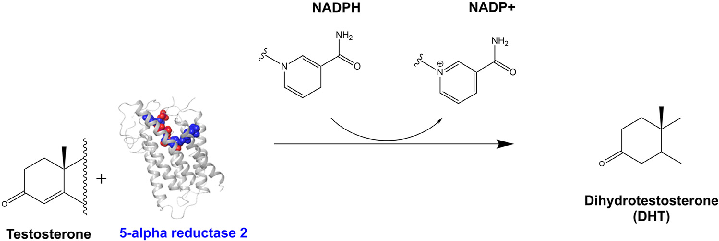
Figure 3
The DHT synthesis pathway via SRD5A2 is diagrammed, showing how 5-alpha reductase converts testosterone to dihydrotestosterone in the presence of NADPH, the key hormonal driver of AGA.
diagram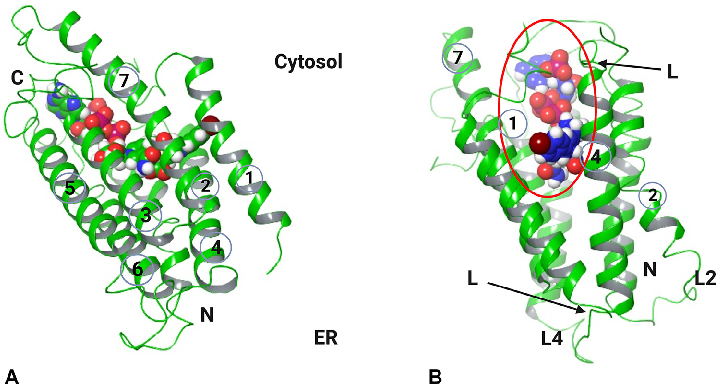
Figure 5
The three-dimensional structure of human SRD5A2 is shown with its seven transmembrane domains, active site, and NADP-DHF adduct positioning within the enzyme channel.
diagramCite This Figure
 > Source: Sincengile Ntshingila et al. "Androgenetic alopecia: An update.." *JAAD international*, 2023. PMID: [37823040](https://pubmed.ncbi.nlm.nih.gov/37823040/)
<figure>
  <img src="https://pdfs.citedhealth.com/figures/37823040/111.png" alt="Finasteride's mechanism of inhibition is depicted at the molecular level, showing covalent adduct formation between NADPH and finasteride that prevents further hydride transfer to testosterone." />
  <figcaption>Figure 4. Finasteride's mechanism of inhibition is depicted at the molecular level, showing covalent adduct formation between NADPH and finasteride that prevents further hydride transfer to testosterone.<br>  Source: Sincengile Ntshingila et al. "Androgenetic alopecia: An update.." <em>JAAD international</em>, 2023. PMID: <a href="https://pubmed.ncbi.nlm.nih.gov/37823040/">37823040</a></figcaption>
</figure>